Robust mobile flood protection

The emergency barrier that stays practical when the site stops being perfect.

Inero is built for the real flood response chain: storage, transport, crew handling, fast installation, uneven ground, moving water, debris, overtopping, cleaning, repacking and reuse. It is not only a wall against water. It is a complete operational system for civil protection, municipalities, industry and critical infrastructure.

Flood response is a logistics problem before it is a water problem

A barrier only works if crews can move it, understand it, install it and trust it under pressure.

Standards test isolated performance points. Real emergencies test the chain around them: staging, transport, handling, connection, terrain, pumping, cleanup and reuse.

01 Stage close

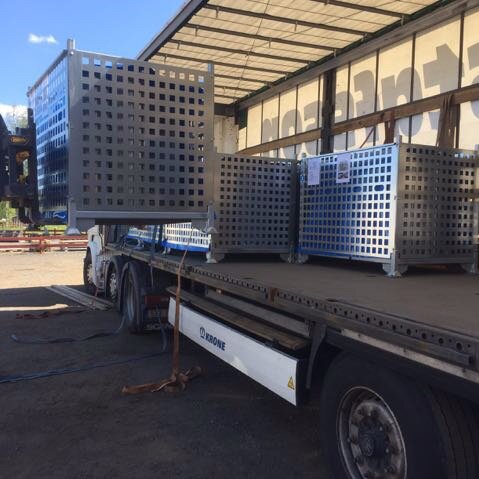
Compact crates reduce storage volume and make it easier to keep protection near known risk zones.

02 Move fast

Standard logistics equipment can move the pallets, so deployment does not depend on specialist handling.

03 Install clearly

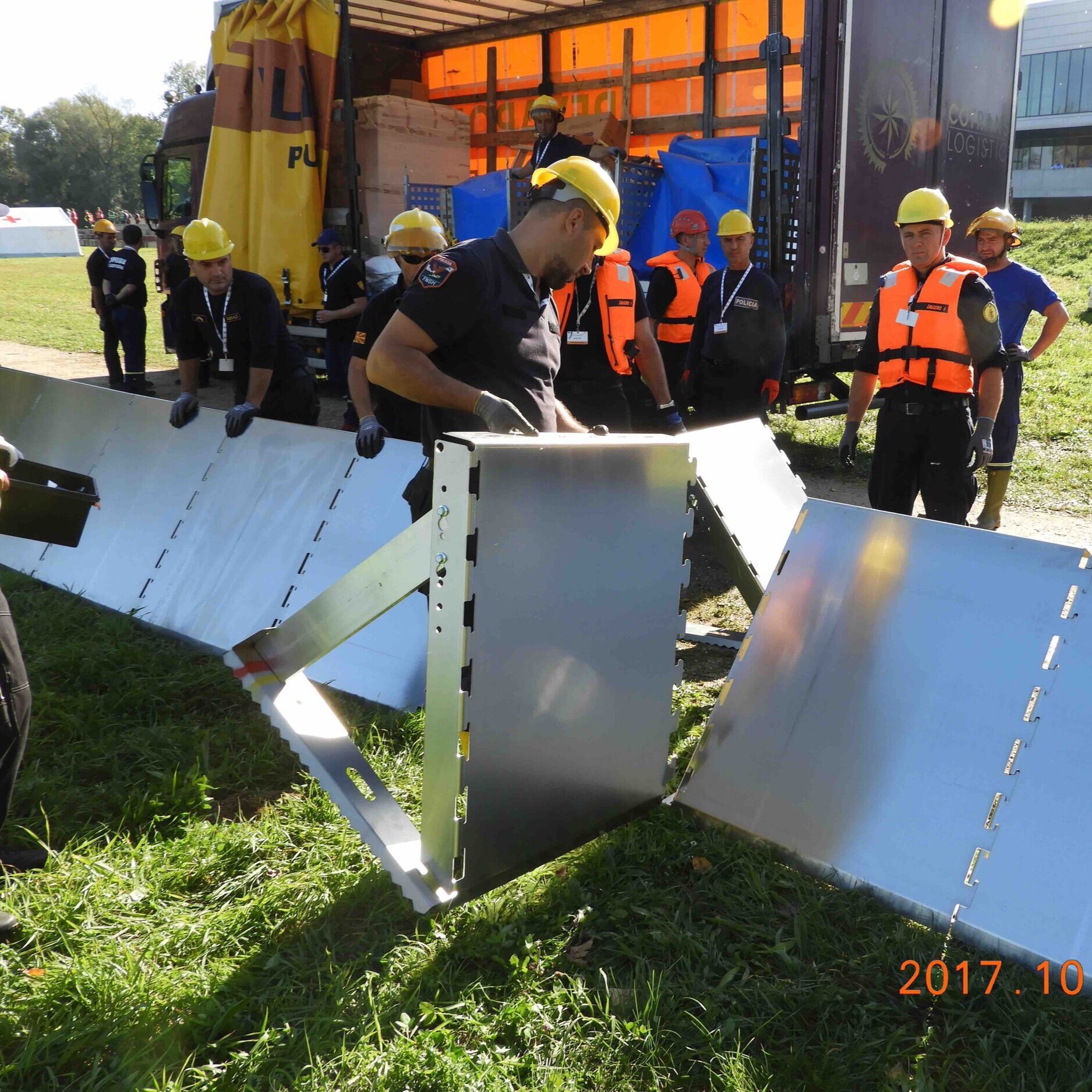
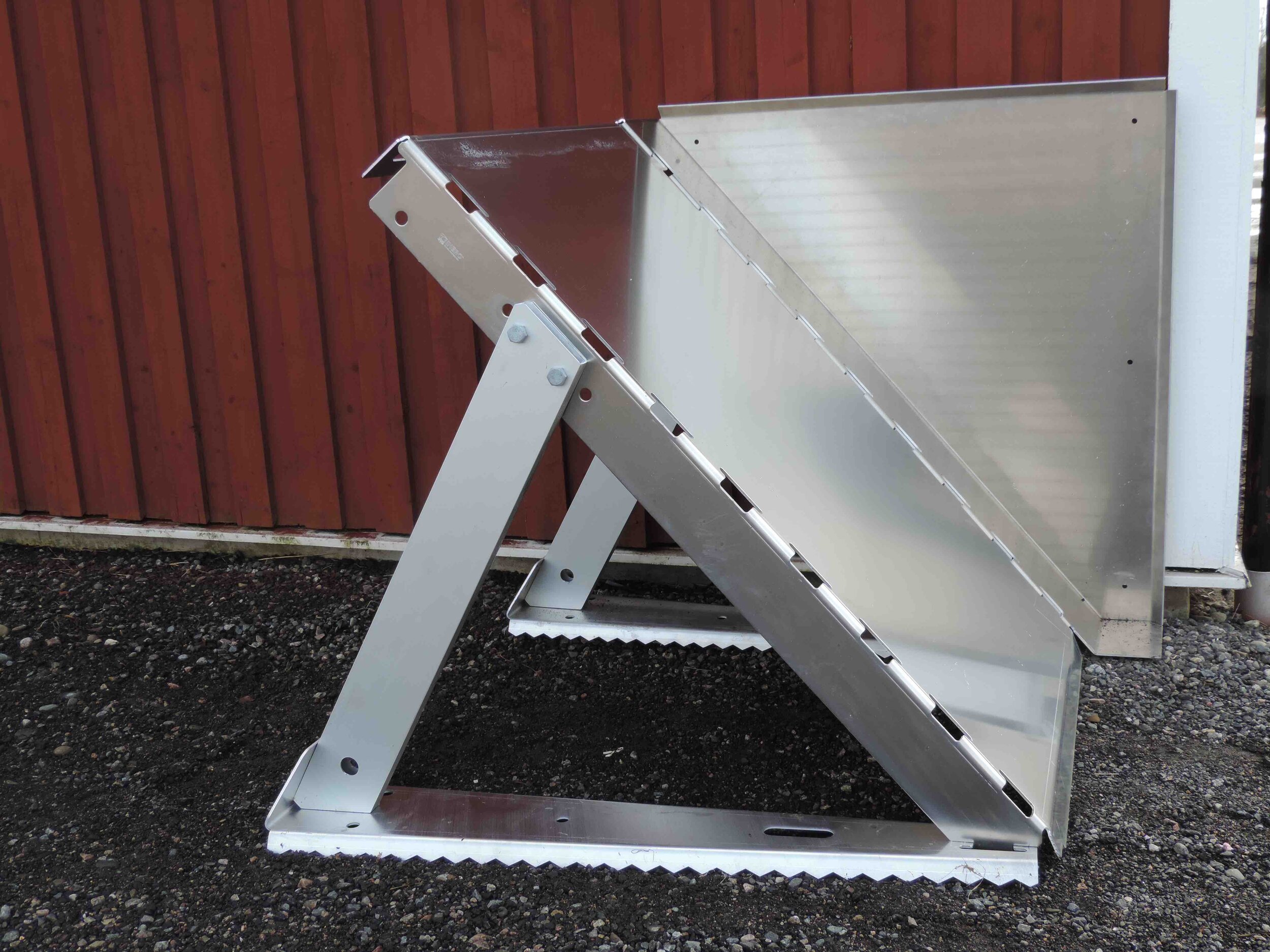
Upright sections, pre-mounted bolts and quick connectors guide crews through the work under pressure.

04 Adapt on site

Curbs, slopes, walls, pump tubes and partially flooded ground are expected field conditions, not exceptions.

Why Inero is different

Three advantages in one system

01

Fast enough for emergency response

The barrier is packed for speed before crews even arrive. Crates can be accessed from both ends, sections stand upright at working height, bolts are pre-mounted, and installation requires no electricity or advanced tools. Inero states that 2-3 people can install 100 m of H80 in approximately one hour.

02

Strong enough for imperfect flood conditions

The solid-panel aluminium system avoids the burst or deflation risks of bladder-style products. The patented locking mechanism distributes load between sections, while third-party tests and calculations address pressure, current, overtopping, leakage and debris impact.

03

Flexible enough for real sites

Flood lines rarely follow a straight, flat surface. Inero is made for asphalt, gravel, grass, slopes, kerbs, corners, wall connections, flooded ground, pump operations and temporary openings. It behaves like a field system, not a one-condition product.

Inero patented quick connector
Patented quick connector

The connector is the system

Quick installation, structural continuity and security in the same detail.

The quick connector is not just a faster latch. It is what lets compatible barrier heights connect into one line, what helps crews adjust to slopes and uneven transitions, and what supports the barrier line under load. Because the connection is integrated into the section logic, there are fewer loose safety-critical parts to track, lose or install incorrectly.

That matters in an emergency. A flood barrier is often installed by tired crews, in bad weather, under time pressure, on ground that has already started changing. The best component is the one that guides correct assembly by shape and function.

Compatible heights Load transfer Tamper resistance Curves and overlaps

Proof under pressure

Designed with margin, tested at full scale

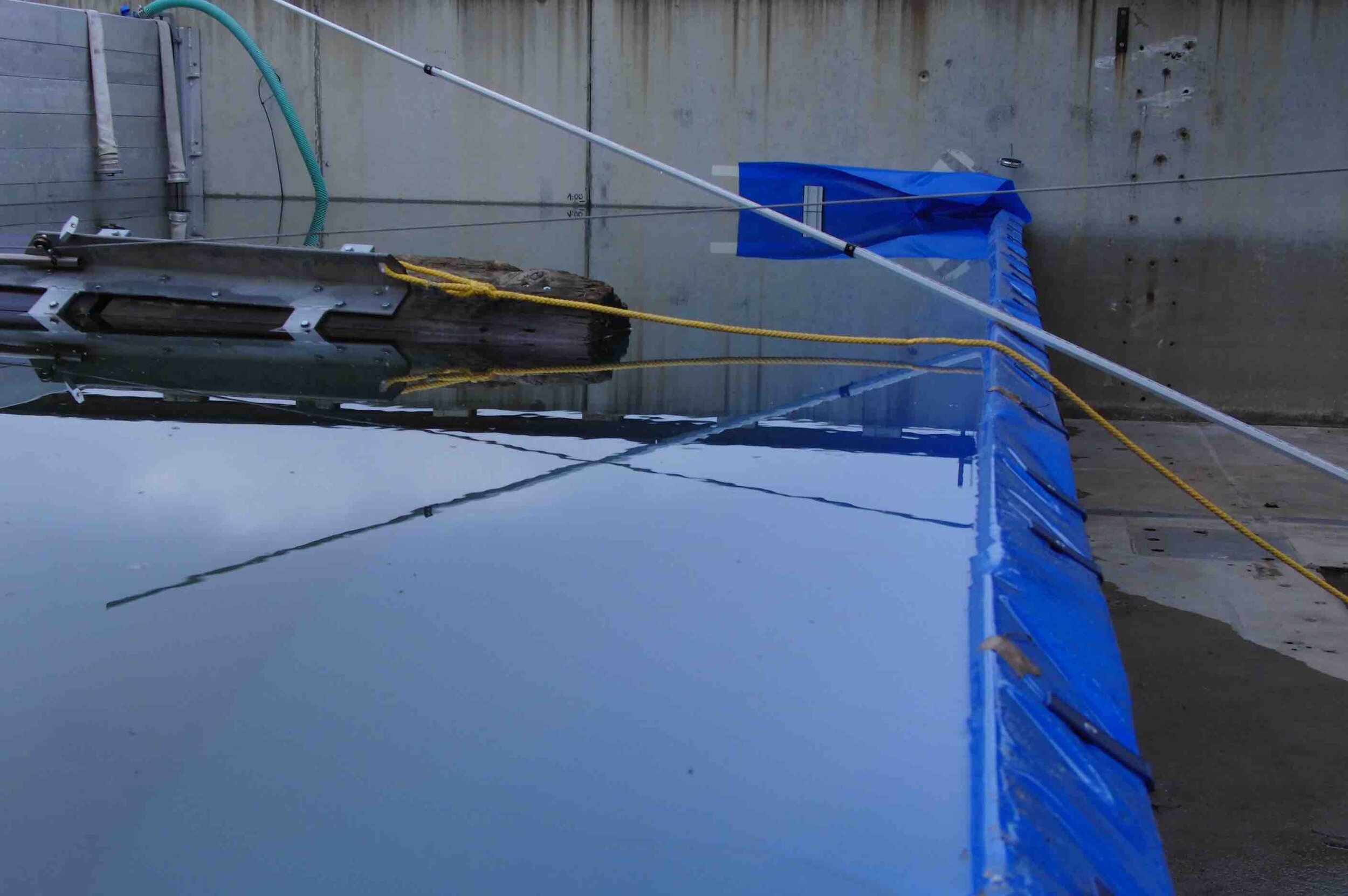
Inero impact test with floating log
Debris impact testing

Debris impact resistance

Moving debris turns water level into a structural event. Inero references full-scale impact testing with 200 kg and 400 kg logs, with the barrier remaining stable. The angled and rigid construction helps deflect floating objects rather than simply receiving a direct vertical strike.

Leakage control

Inero durability material references repeated water-level testing with leakage below 40 L/m/h. Lower leakage means less pump capacity, lower energy demand, fewer crew interventions and less residual damage behind the protected line.

Safety factor and tensile continuity

Third-party calculations and evaluations address structural integrity of the barrier and extensions. Tensile strength matters because some systems fail at the joints long before the panels themselves are the limiting factor.

Overtopping and current

Inero material references testing and calculation for overtopping, current and pressure gradients. The goal is not only to stand at nominal height, but to remain stable when flood conditions exceed neat assumptions.

Deployment and logistics

Built to leave the warehouse fast and return ready.

Emergency barriers spend most of their life in storage, then suddenly have to become infrastructure. Inero's crate system, compact nesting and upright storage are designed to make that transition predictable.

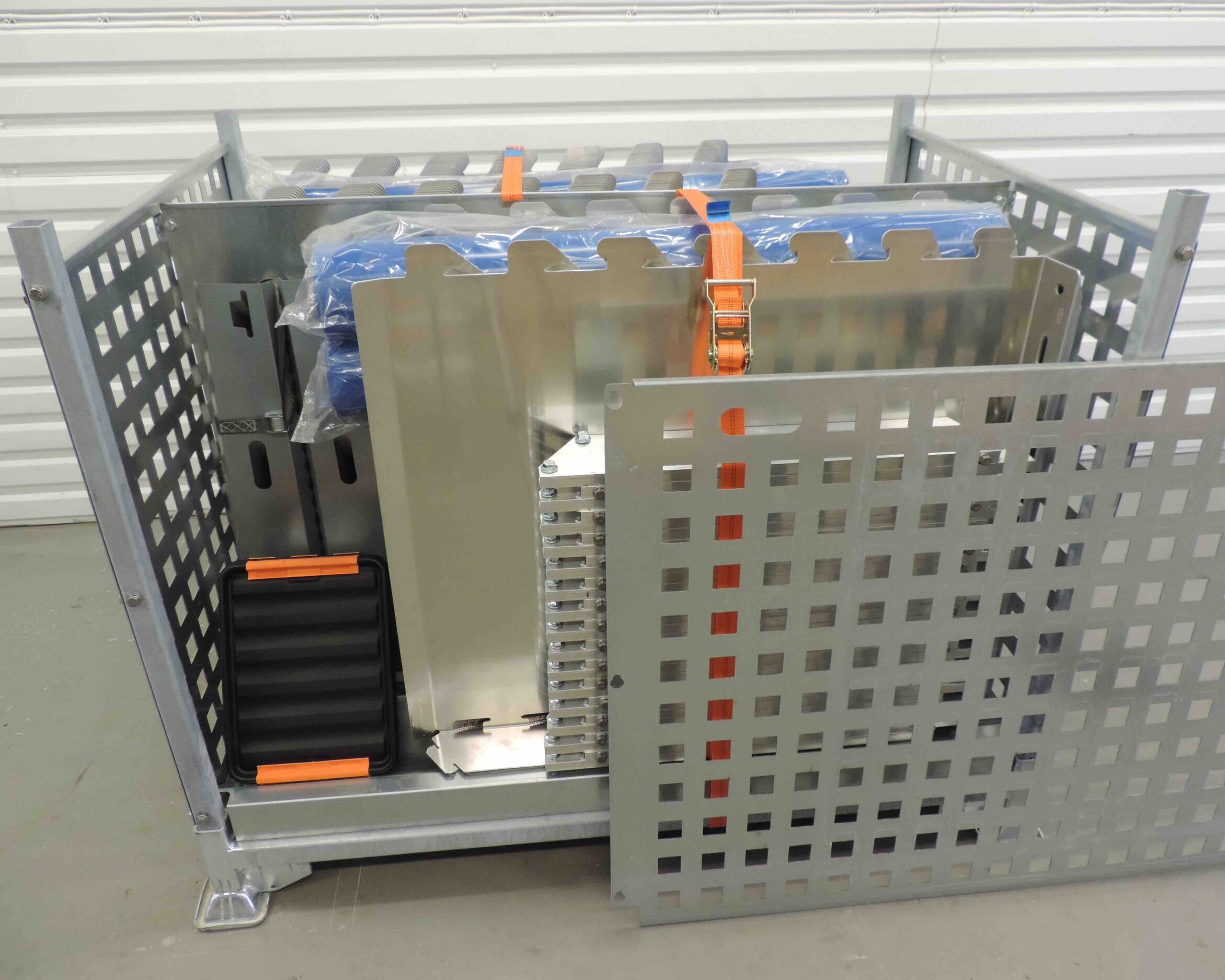
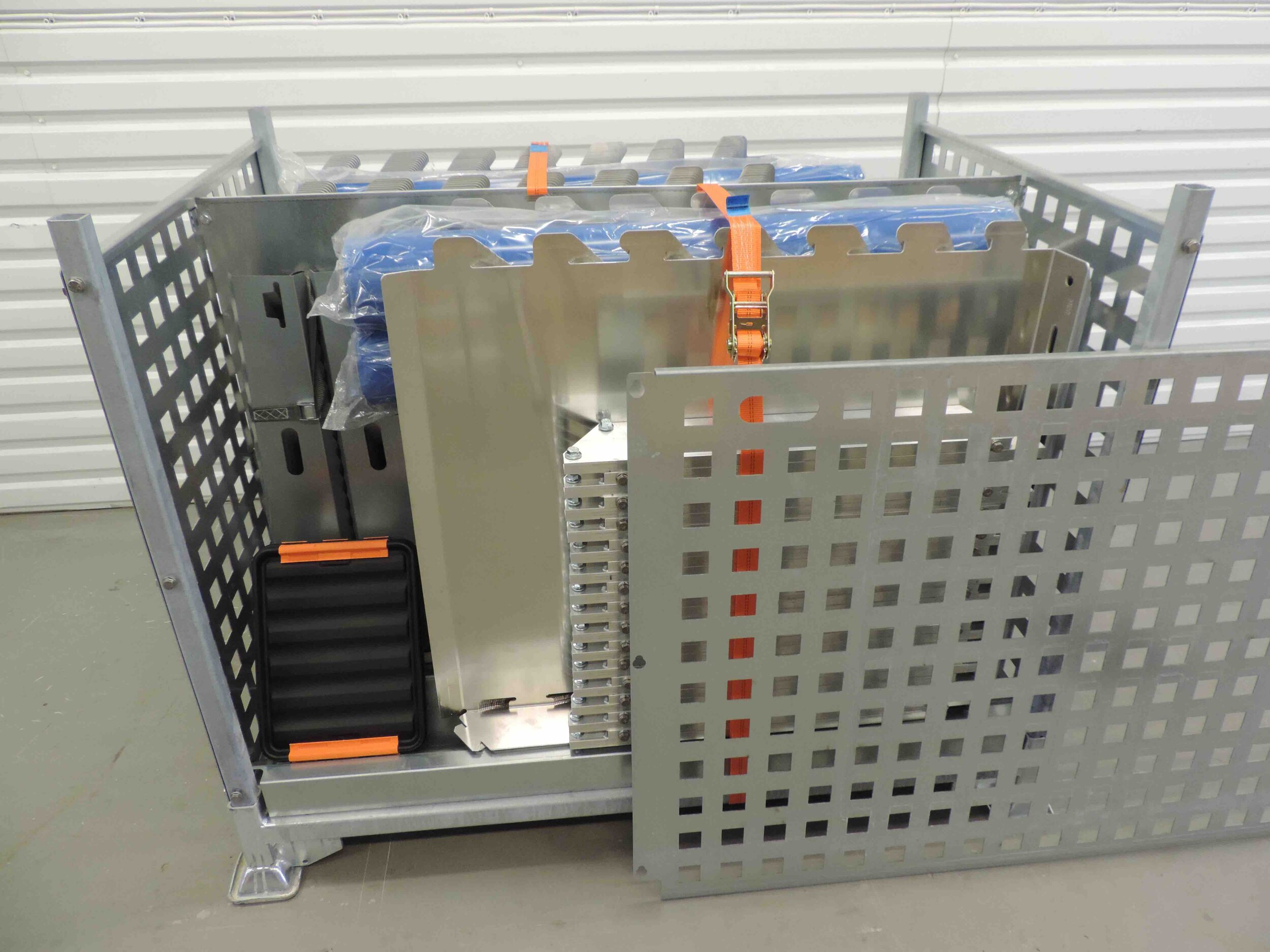
Each crate is pre-packed with a fixed barrier length for planning and inventory control: H50 and H80 at 100 m, H100 at 50 m and H150 at 25 m. Crates are compatible with forklifts, pallet jacks, wheel loaders and cranes, and can be stacked vertically to reduce storage footprint.

Inero H80 steel pallet
Stackable steel pallet
H50100 m/crate
H80100 m/crate
H10050 m/crate
H15025 m/crate
01

Stage

Compact pallets reduce the space needed for permanent stockpiles and make it easier to position barriers near known risk zones before a storm.

02

Deploy

Sections are lifted one by one from an ergonomic position, with no loose-part sorting and no powered tools required for normal installation.

03

Connect

Quick connectors and overlap methods allow crews to close gaps, join work fronts and adjust length without waiting for a perfectly measured line.

04

Reset

After use, sections can be rinsed, returned upright to the crate and stored for redeployment without a repacking puzzle.

Versatile emergency barrier

Real floods do not respect straight lines

Inero barrier on uneven ground
Uneven ground and height changes

Uneven ground, kerbs and elevation changes

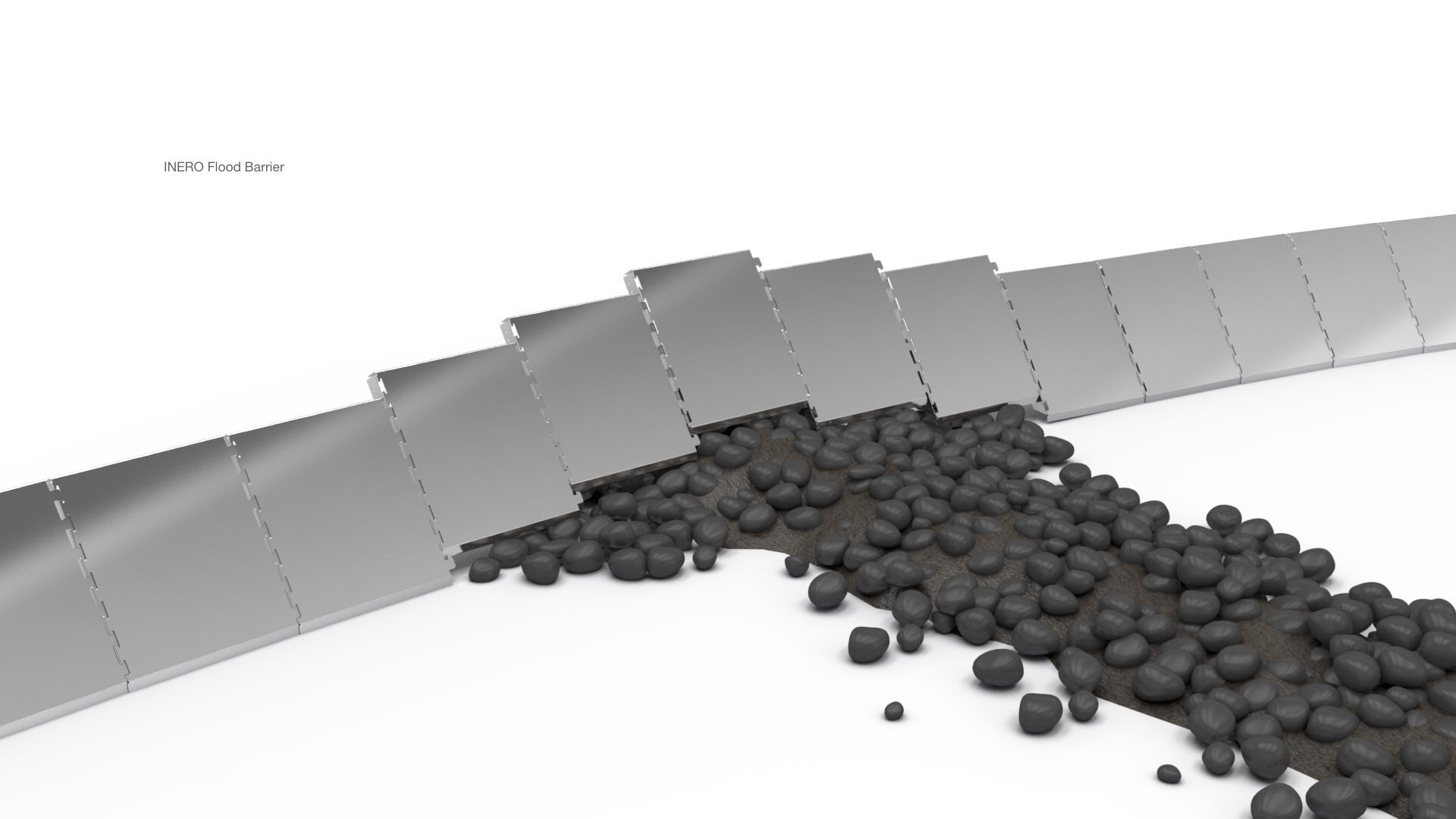
Inero is designed to adapt to grass, gravel, asphalt, rough ground, slopes and urban kerbs. The quick connector can adjust the barrier height by one or several levels, and corner modules can be used where slope transitions or sharp turns demand a controlled geometry.

Flooded-area installation

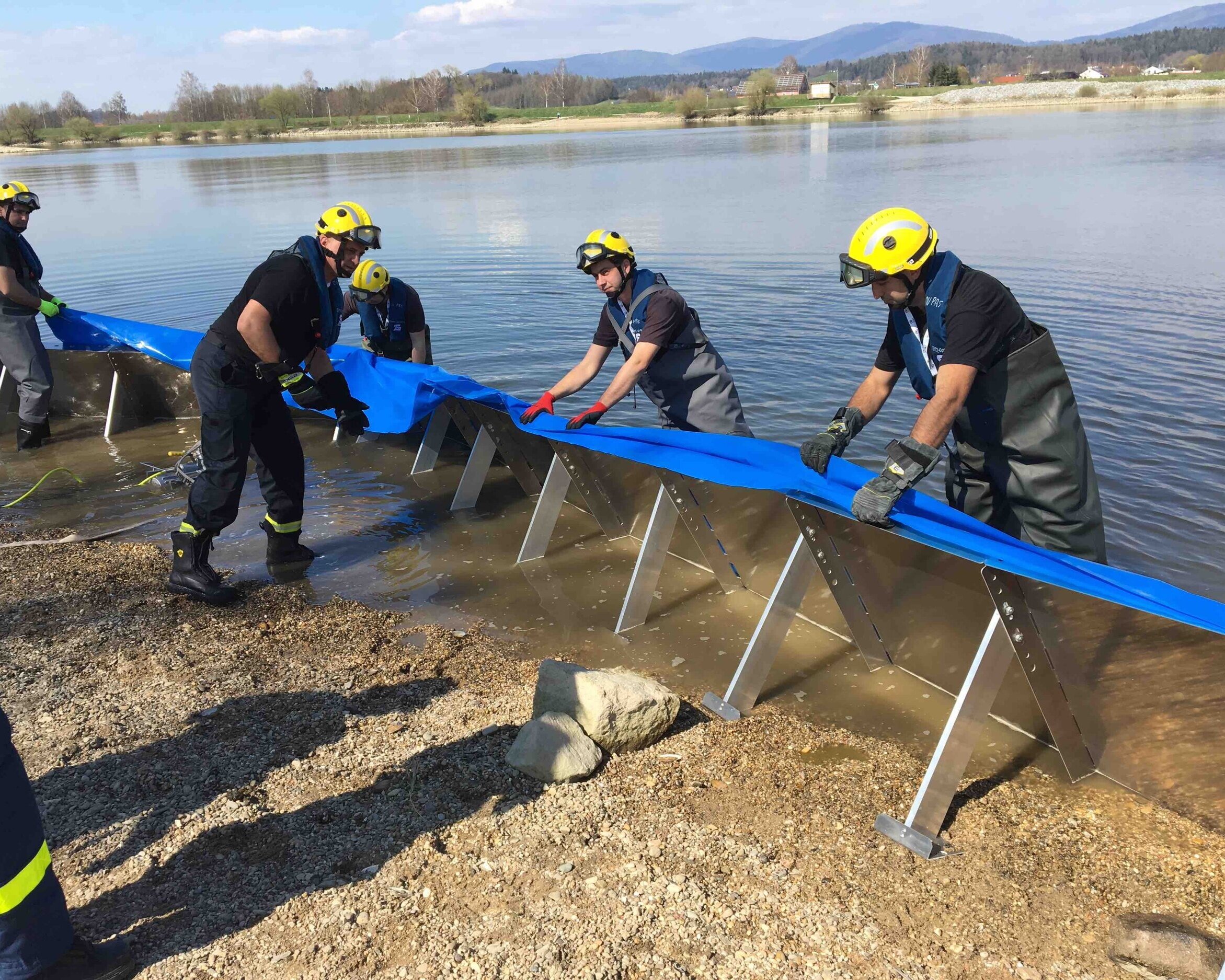
When a response starts late, the barrier can still be deployed in partially flooded areas without placing hands below the waterline. That gives crews a larger operating window and can turn a delayed response into a usable intervention.

Inero barrier installation in water
Installation in water

Field configurations

A system for more than one flood line

Inero wall mount for buildings and bridge foundations

Connect to buildings and bridges

Wall mounts close the barrier line against fixed structures such as facades, bridge foundations and quay walls, making it easier to protect sites where the flood line meets existing infrastructure.

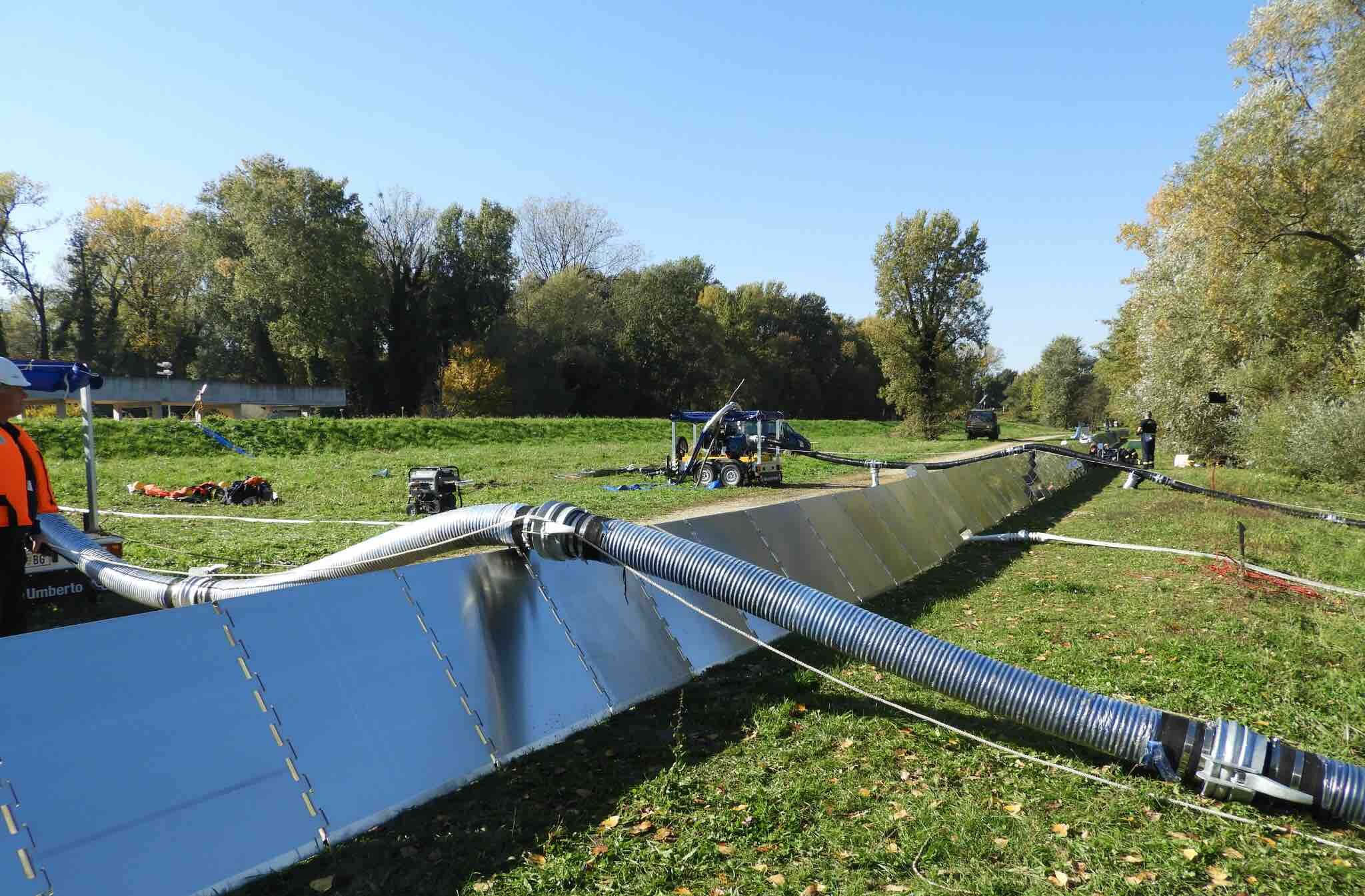
Heavy pump tubes over an Inero barrier

Support pump operations

The robust crest can work around heavy pump tubes, and the connector can be adjusted when a hose must pass underneath a section. That keeps the barrier compatible with active drainage work, not separate from it.

Inero logistics and compact storage

Enable multi-team installation

Multiple crews can start from different points and connect when they meet. Overlapping sections and standard fittings help close irregular distances without custom fabrication in the field.

Beyond the old comparison chart

Inero turns standard criteria into operational benefits

Leakage, current and overtopping Tested and calculated water performance supports lower pump demand, better stability and more confidence when water conditions exceed nominal assumptions.
Debris impact and tensile strength The barrier line is evaluated for both panel impact and joint continuity, addressing a practical failure mode that ordinary leakage tests do not fully capture.
Corrosion, reusability and cleaning Marine-grade aluminium, rinse-and-repack handling and recyclable material choices support long service life instead of single-event disposal thinking.
Installation, terrain and accessories Flooded-area installation, 30 degree corners, wall mounts, overlapping sections and compatible heights turn a tested product into a deployable site system.

Inero sustainability and recyclable material
Lifecycle value

Long-life infrastructure

Lower lifetime cost starts with a product that can be used again.

Inero's feature overview describes an aluminium system built for 30-50 years of service, easy rinsing and reuse, straightforward repacking and recyclable end-of-life materials. The barrier also preserves residual material value through marine-grade aluminium, which can be recycled without losing quality.

This matters because the cost of a flood barrier is not only purchase price. Storage space, transport efficiency, crew time, cleanup, replacement cycles, spare parts, maintenance and end-of-life disposal all shape the true cost of protection.

Proven track record

Trusted by public agencies, infrastructure operators and critical industries

Inero is already part of real flood protection planning, not just laboratory testing. The system is described as selected and deployed across Europe, Asia and North America by the organisations that have to keep cities, utilities and infrastructure working when water rises.

That adoption matters because it reflects operational trust: crews need a barrier that can be stored for years, moved quickly, installed by ordinary teams and reused after the event.

3 continents referenced
18 countries listed in the feature overview
24/7 emergency readiness mindset
Municipalities Emergency services Waterworks Transport hubs Pump stations Critical industry